
Trending Designs in Gemstone Slab That Elevate Your Home Décor

Why Black Obsidian Slab Has Natural Antibacterial Properties and Its Use in Kitchen and Bathroom Installations
How to Clean a Black Agate Slab Surface Without Dulling Its Natural Finish
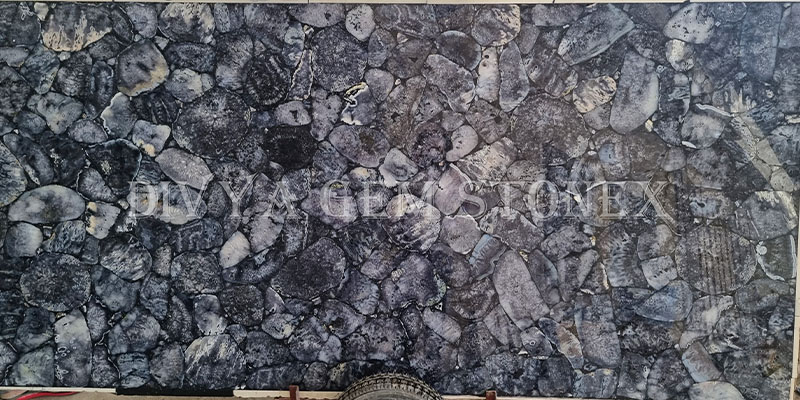
Black Agate Slabs
The thing nobody mentions when you buy natural stone is this: cleaning it badly does more damage than leaving it dusty. You bring home a carefully polished black agate slab that costs you real money, it sits beautifully for a few weeks, then one afternoon you notice dust and grab whatever spray is closest. One wipe. Then another. Weeks later the surface looks somehow flat, less alive than it used to, and you cannot figure out why. The cleaner did it. Slowly, quietly, wipe by wipe. And getting that finish back means professional re-polishing which is fixable, but still.
The Polish Is Not the Stone
Worth understanding before anything else. Agate scores 6.5 to 7 on the Mohs scale, so the stone itself is not fragile. But that deep glassy finish on top? That came from mechanical polishing. It has no acid resistance. No immunity to abrasives. Vinegar strips it. Bleach strips it. Even baking soda which people reach for because it sounds gentle and natural is gritty enough to wear it down over time. The stone underneath sits there completely fine while the polish disappears. That is the part that catches people off guard. The damage is invisible right until it is not.
Your Cleaning Kit Should Be Boring
Soft microfiber cloth. Warm water. pH balanced stone cleaning solution. That’s it. Not something flashy, not something from a specialized shop. If you don’t have a special cleaning solution meant for stone surfaces, a little bit of regular dish soap mixed into water works great for normal fingerprints and dusting. Things to stay away from include vinegar, lemon juice, bleach, ammonia products, and bathroom cleaners in general degreasers in particular. Good products for other purposes but definitely not for stone.
Actually Cleaning It
In dry wipe, all areas are wiped first using a dry microfiber cloth without using any water. Afterward, take another cloth, moisten it slightly with the cleaning solution and wipe slowly in a circular motion. Do not rub! In case of a tough dried stain, place the moistened cloth over the stain and move away for two minutes. Return after two minutes and the stain will be lifted easily. No need to use much force. Lastly, dry the surface using a dry cloth. It is an often-overlooked step, but leaving water on polished stone surfaces leads to deposition of minerals, making it difficult to remove them.
How Often, Honestly
Display pieces should be wiped once per week. Surfaces that are used daily are best off having a wipe done immediately after usage and then again a week later. Stone sealants should be applied on the stone material once in three to six months depending on whether the test for beading or flat spread comes back positive.
Why Divya Gem Stonex
Most stone suppliers are helpful until the purchase is done. Questions that come up later which cleaner is safe, how often to seal it, and whether a particular product will cause damage tend to get vague answers or no answer at all. Divya Gem Stonex has worked with natural stone long enough that these questions have real, specific answers. The range covers decorative pieces through to large architectural slabs. Everything is checked before it ships. If you have a question before or after buying, the team actually knows the answer.
Your Stone Is Fine. Keep It That Way.
The cleaning routine for natural stone is genuinely simple once you drop the instinct to reach for strong products. Microfiber cloth, mild cleaner, dry it properly afterward. That is the whole thing. Problems happen when someone tries a product they were unsure about and discovers the damage after. So when in doubt, ask before you try it. The question takes thirty seconds. Undoing the damage takes considerably longer.

 WhatsApp