
How to Clean a Black Agate Slab Surface Without Dulling Its Natural Finish

Pairing Your Agate Wash Basin With the Right Faucet, Vanity & Lighting Fixtures
Why Black Obsidian Slab Has Natural Antibacterial Properties and Its Use in Kitchen and Bathroom Installations
Porous Stone Has a Hygiene Problem Most People Ignore
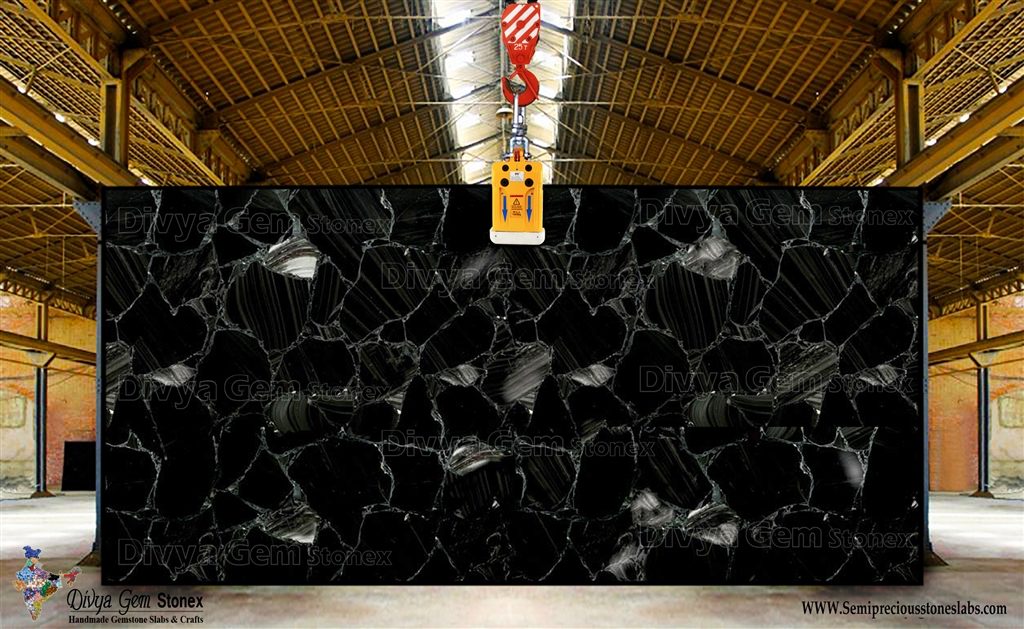
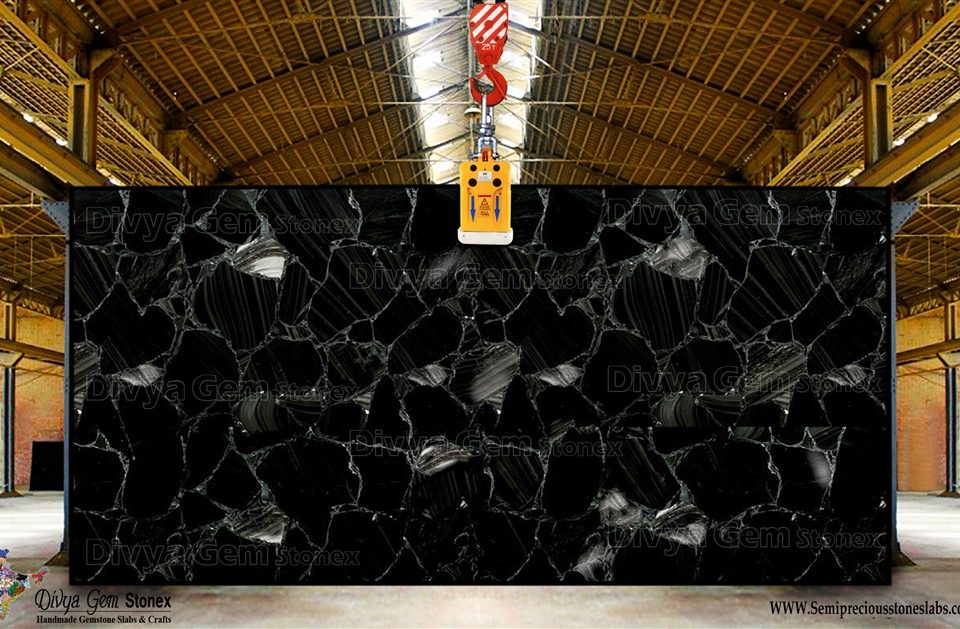
Browse any kitchen renovation forum and you'll find the same regret thread: someone picked beautiful white marble, loved it for six months, can't get the staining out now. It soaked in. That's the problem with porous stone. Once something's inside the material, it's basically a permanent guest. What makes a black obsidian slab different from most stones on the market isn't the look, even though the look is what brings people through the door. It's what the stone is actually made of.
How Volcanic Origins Make Obsidian Non-Porous
Obsidian formed when volcanic lava hit cold air or water and cooled before crystals had time to grow. No crystals means no gaps between them. The whole surface is essentially one continuous piece of glass at the molecular level.
Bacteria need somewhere to land and stay. Marble, granite, and limestone have microscopic grooves and pores invisible to the eye but real enough for microbes. A black obsidian slab doesn't give them that. Nowhere to settle, nowhere to build up, nowhere to hide from a damp cloth.
About 70% of obsidian's composition is silica dioxide, which makes the surface chemically inert. Lemon juice, vinegar, raw meat juices, soap none of it reacts with the stone. That matters because organic matter doesn't bond to it the way it does with softer stones.
It won't replace wiping your countertop down. But when you wipe it, you're actually cleaning it not pushing bacteria deeper into a material that's holding onto them anyway.
In a Working Kitchen, This Stuff Actually Matters
Here's a scenario. You've prepped raw chicken, there's juice on the counter, guests arrive in ten minutes. On unpolished granite with hairline scratches and sealer that's worn in patches, that's a real problem. On a black obsidian slab, one wipe with a damp cloth and you're done.
It doesn't hold grease either. Softer stones absorb cooking oil over time and build up a patchy film that gets harder and harder to shift. Obsidian just doesn't do that.
Scratch resistance matters more than people expect and not just for aesthetics. A surface that stays smooth over time also stays hygienic. Scratches are where bacteria accumulate and where cleaning cloths can't reach properly. Obsidian sits at about 5 to 5.5 on the Mohs scale. Normal kitchens use pots, plates, the occasional dropped knife won't touch it.
The dark color throws people off. They expect it to show every smudge. It shows water marks, yes. That's actually useful. You notice when it needs a wipe, rather than assuming it's clean because it looks uniform.
Bathrooms Are Where Porous Stone Really Falls Apart
Steam. Condensation. Surfaces that stay wet for an hour after every shower. Most natural stones weren't designed for this. Marble in a bathroom looks great for a couple of years, and then the problems pile up grout staining, surface dulling, sealer wearing out in patches, mold that keeps coming back no matter how often you clean.
That last one is worth understanding. Moisture gets into porous stone and stays there. The mold isn't just on the surface it's inside the material, living deeper than any cloth can reach. You clean it, it returns. You can't win that fight with marble.
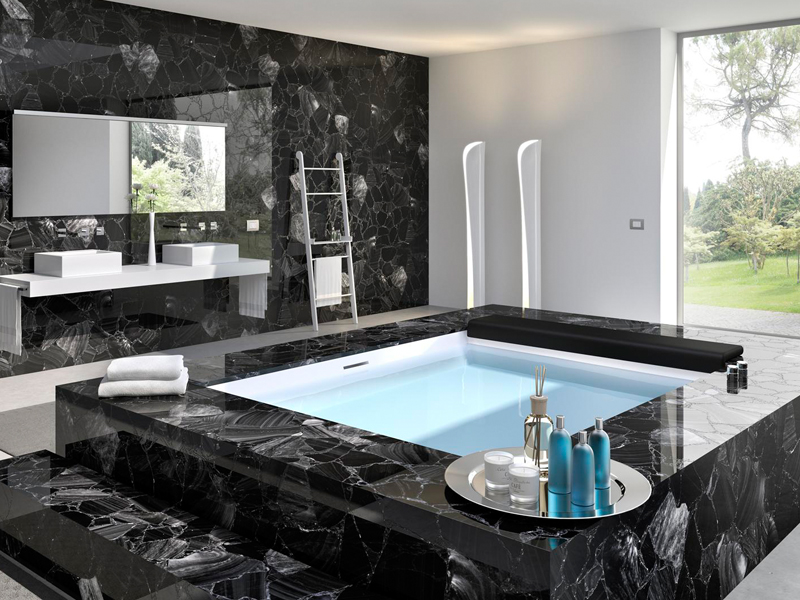
A black obsidian slab doesn't absorb moisture. It sits on the surface and comes off when you wipe it. Five years of daily steam showers won't change that. The stone sealed itself when it formed; there's nothing for a maintenance sealant to do, and nothing for water to get into.
For shower ledges, vanity tops, or full wall cladding in a wet room, that's a genuinely different maintenance reality than most people are used to.
What Buying Through Divya Gem Stonex Actually Looks Like
We source black obsidian slabs directly and know the composition of what we're selling. That sounds basic, but plenty of suppliers don't; they're moving products, not materials. When someone buys from Divya Gem Stonex specifically for the non-porous or antibacterial properties, we want to actually be confident the stone delivers.
We cut to custom dimensions. We're also honest about the one real challenge with obsidian: it's heavy. Heavier than most stones people are used to. The substrate needs to be right for it, and that affects installation cost and planning. We tell every client this before they commit, because finding out after the slab is ordered is not a fun conversation for anyone.
Finish options are matte, honed, or polished. For kitchen counters we usually steer people toward less slippery, doesn't show fingerprints, holds up well over time. For bathroom feature walls or shower panels, polished looks striking and the wet environment doesn't affect it.
So Should You Go With Obsidian?
If you want a surface that manages itself hygienically, never needs sealing, and holds up in a wet room for years without deteriorating a black obsidian slab is worth serious consideration.
If you want the cheapest stone on the market, or something that reads like the classic white marble kitchen, it's not your material.
Reach out to Divya Gem Stonex with the details of your project and we'll give you a straight answer on whether it fits.

 WhatsApp