
Color Fading in Semi-Precious Stone Surfaces: Causes, Prevention, and Restoration Solutions

Are Quartz Wash Basins Better than Stainless Steel Sinks?
Which Sink is Better: Granite vs Quartz Wash Basin?
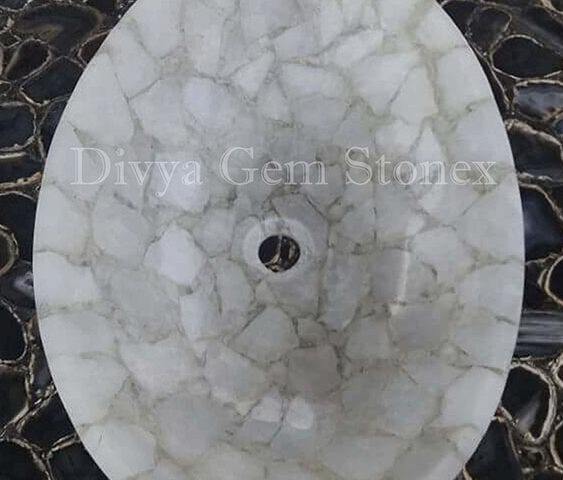
Most people walk into a showroom thinking this decision is mostly about looks. It isn't. Material affects how much time you spend cleaning, how long the sink actually lasts, and whether you're resealing every year or just getting on with your life. A well-selected quartz wash basin handles daily punishment better than most people expect: no sealing, no fuss, no staining panic. Granite is genuinely beautiful and earns its fans. But the day-to-day reality of owning each material is worth understanding before you decide.
What Makes a Quartz Wash Basin Worth Choosing
Quartz is engineered. Ground quartz crystals get mixed with resin and pigment, then compressed under high pressure into dense, consistent slabs. That process closes every pore. Water sits on the surface rather than soaking in. Stains don't penetrate. Bacteria don't find gaps to settle into. You clean a quartz wash basin with soap and a cloth that's the whole routine, forever. No sealant appointments, no special products, nothing. For something that gets used five or six times a day, that kind of low maintenance is genuinely worth paying attention to.
Granite Wash Basins: The Honest Pros and Cons
Granite is the real thing pulled from the earth, cut into slabs, and no two pieces ever identical. The variation is the point. It has a natural depth and character that engineered stone hasn't quite managed to replicate, and probably never will. It's also extremely hard and shrugs off heat without issue. The catch is porosity. Granite absorbs water. It absorbs soap residue. Leave it unsealed and it absorbs bacteria too. A sink is wet constantly, which means sealing isn't optional; it's every one to two years, on schedule. Miss a few rounds and you're looking at deep staining that no amount of scrubbing fixes.
Maintenance Reality: What Owning Each Material Actually Looks Like
With quartz, there's nothing to schedule. No annual maintenance, no specialist products, no risk if you forget. With granite, the upkeep is real and ongoing. That's not necessarily a dealbreaker; plenty of people seal their granite and think nothing of it. But plenty of others intend to and don't, and that's when problems start. Granite does handle extreme heat slightly better than quartz, which can discolour under sustained very high temperatures. For a bathroom sink, though, that advantage is almost entirely theoretical. In practice, quartz is less work to own.
Design Options for Your Quartz Wash Basin
Quartz comes in a wide range of colours now whites, soft greys, warm beiges, deep charcoals, near-blacks. Because colour runs through the entire slab, a chip or scratch doesn't expose a different layer underneath. What you pick is what you get, all the way through. Granite gives you something quartz genuinely can't match: natural depth, movement, and variation that comes from geology rather than manufacturing. The tradeoff is that your colour choices depend entirely on what that particular quarry produced. If you have a precise finish in mind, quartz is more likely to deliver it.
What You're Actually Paying Across the Full Lifespan
Both materials sit in a similar mid-to-premium price range. Granite sometimes costs less upfront at the entry level. But professional resealing every couple of years, the realistic risk of staining if maintenance slips, and refinishing costs if damage sets in add those up over a decade and the gap closes. Installation costs roughly the same for both since neither is light and both need professional handling. After installation, quartz costs almost nothing to maintain.
Why Divya Gem Stonex Is the Right Place to Buy
We stock both granite and quartz, and we tell people honestly which one suits their situation. If low maintenance matters to you, we'll steer you toward quartz. If you want natural stone and you're genuinely committed to looking after it, granite is absolutely worth it. At Divya Gem Stonex we've been doing this long enough to know that a mismatched recommendation causes more problems than it solves for the customer and for us. We also stay reachable after the sale, which sounds standard but isn't always.
So Which One Do You Actually Need?
Quartz wins on practicality for most people: easier upkeep, better hygiene, wider colour choice, nothing to remember year after year. Granite wins if natural character is non-negotiable for you and the maintenance is something you'll genuinely follow through on. Both are good materials. The right one depends entirely on how you actually live, not how you plan to.

 WhatsApp