

Which Sink is Better: Granite vs Quartz Wash Basin?

Is a Golden Quartz Slab the Right Choice for a High-Traffic Commercial Space?
Are Quartz Wash Basins Better than Stainless Steel Sinks?
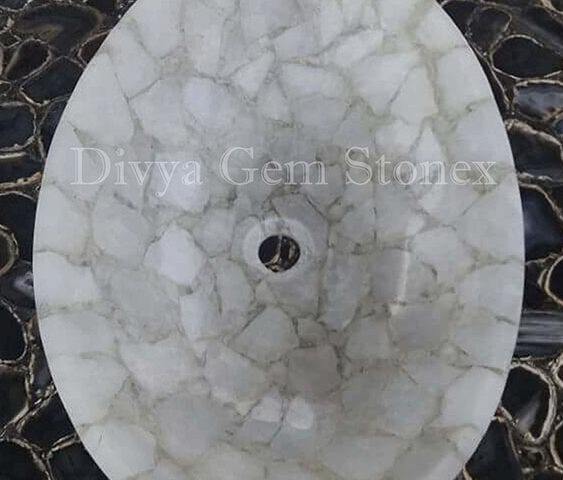
Nobody thinks hard about their sink until they are stuck with the wrong one.
You spend weeks choosing tiles, countertops, cabinet handles. Then the contractor points at a stainless steel sink in a catalogue and you say fine, sure, whatever. Six months later you are scrubbing mineral stains off it every other week and wincing every time a steel vessel hits the basin. Here is the thing: the sink gets used more than almost any other surface in your home. It deserves ten minutes of actual thought. And once you compare properly, a well-made quartz wash basin in a kitchen or bathroom setup tends to win that comparison for most households.
Why a Quartz Wash Basin Wins on Durability and Looks
Quartz composite is crushed stone mixed with resin, compressed into something genuinely dense and tough. There is no surface coating. The color runs all the way through the material. So the fading and chipping questions people ask are mostly not a real concern.
Stainless steel scratches. Slowly, quietly, constantly. Two years of daily cooking leaves a fine web of marks that grease and old soap settle into. You can clean around it but you cannot clean it out. And harsh descalers dull the finish over time. That showroom shine is gone by year three in most kitchens.
Quartz does not do that. The surface you install is basically the surface you keep.
Heat, Stains, and the Daily Punishment a Sink Takes
Good quality quartz composite tolerates temperatures up to around 280°C. Boiling water, hot vessels set down quickly handled. Thinner stainless steel models discolor with repeated heat near the drain. That yellowish ring that appears over time is not coming off.
Staining is where the gap is clearest. The non-porous surface of quartz means turmeric, coffee, and cooking oil sit on top rather than soaking in. A quick wipe handles most of it. With stainless steel and hard water which describes most Indian cities white mineral deposits build up around the drain and tap base fast. Removing them properly means dedicated descaling products on a regular schedule. Quartz owners mostly skip that chore entirely.
Sound and Weight Two Things Nobody Warns You About
Steel sinks are loud. Drop anything metal in one and the sound bounces through the countertop and into the cabinet below. Rubber padding underneath dampens it slightly. Not enough. In an open kitchen or a flat with any shared walls, you notice it every single day.
Quartz absorbs impact because of its density. It is genuinely quieter in use, not a small difference either.
Weight flips the advantage. Stainless steel is light and straightforward to install. Quartz is heavy and needs proper cabinet support underneath. Older kitchen units sometimes need reinforcing before a composite sink fits safely. Worth checking before installation day, not during it.
A Quartz Wash Basin Belongs in Bathrooms Too
Stainless steel in a kitchen is fine. Stainless steel in the bathroom looks like a petrol station restroom. Nobody wants that aesthetic in a home they have put money into.
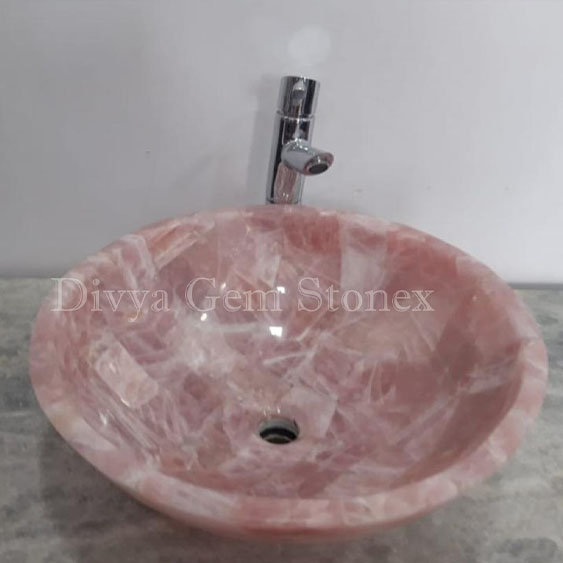
Quartz works in both spaces without awkwardness. A matte black or warm grey quartz wash basin sits naturally next to stone countertops, wooden vanities, or modern wall tiles. The available finishes black, charcoal, off-white, sandstone coordinate with most bathroom palettes without forcing anything. If you are fitting a kitchen and a bathroom in the same renovation, quartz is the one choice that does not look out of place in either room.
Why Choose Divya Gem Stonex
Cheap composite sinks cut corners in a specific way they make the visible surface thick enough to look solid while the base stays thin. It passes inspection in a showroom and shows problems two years into actual use. Divya Gem Stonex manufactures with consistent density through the full basin body. What you see on the surface is the same material all the way through. Every piece is checked for finish quality, edge accuracy, and structural soundness before it leaves. Custom sizing is available for non-standard counter cutouts and bespoke vanity projects handled without the minimum-order complications that most manufacturers insist on. Pricing is straightforward. Not rock-bottom, not inflated.
So Which One Should You Actually Buy?
If the budget is genuinely tight, stainless steel works. It does the job.
But if you are putting real money into a renovation and want the sink to still look right in a decade with fewer stains, less noise, no dull finish creeping in quartz composite is the more practical choice. Most people who make the switch do not look back.

 WhatsApp