
Pairing Your Agate Wash Basin With the Right Faucet, Vanity & Lighting Fixtures

Color Fading in Semi-Precious Stone Surfaces: Causes, Prevention, and Restoration Solutions
Why Your Selenite Table Top Is Losing Shine and How to Restore It Properly
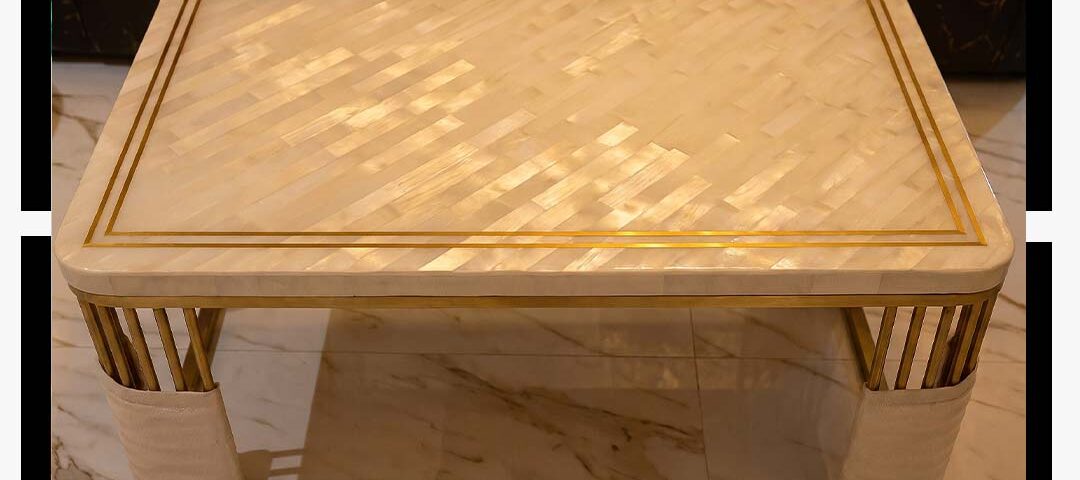
What Your Selenite Dining Table Top Is Actually Trying to Tell You
You bought it for that light. The way it glows from inside rather than reflecting off the surface like regular stone. Then somewhere along the way it started looking flat, foggy, a bit like an old mirror. And now you're wondering if you ruined it. Here's what most people don't find out until after the damage is done: grabbing a damp cloth to clean a selenite dining table top is about the worst thing you can do to it regularly. Nobody mentions this at the shop. Selenite lands at a 2 on the Mohs hardness scale; your fingernail is harder. It's not granite. It's not quartz. It doesn't shrug things off.The cloudiness you're looking at is usually fixable. In most cases it's the surface, not the stone underneath. But first you need to know what actually caused it.
The Real Reasons a Selenite Dining Table Top Goes Dull
Let's start with water, because it's almost always water. Not a flood, not a major spill, just the habit of wiping the table down with a damp cloth after meals. Selenite is a hydrated calcium sulphate. Water doesn't sit harmlessly on it; it slowly works into the surface layer and dissolves it at a microscopic scale. You won't notice it happening. You'll notice it three months later when the glow just isn't there anymore. Cleaning sprays accelerate this badly. Anything with acid in it vinegar, citrus, most kitchen surface sprays doesn't just dull selenite, it actively strips it. One person I spoke to used a glass cleaner on their table thinking it would be safe, since it's marketed for delicate surfaces. The difference was visible within days. These products aren't labeled with selenite warnings because the manufacturers aren't thinking about crystal furniture. That's your problem to know ahead of time. Sunlight is slower to cause damage but it adds up. Six months of afternoon sun through a west-facing window and you'll start noticing a greyish cast and some surface fading that's genuinely hard to reverse much harder than dealing with moisture damage early.Oils are the sneaky one. Fingerprints, food residue, the bottom of a glass that left a slight trace. Each one leaves a film you can barely see, and that film catches dust, and over time the surface just looks tired. What's frustrating is that wiping it repeatedly without the right method just spreads the film around rather than removing it.
Step-by-Step: How to Restore a Selenite Dining Table Top Without Making Things Worse
Dry first. Always dry first. No water, no spray, no oil yet just a soft microfiber cloth and some patience. Work in small sections using circular strokes that aren't aggressive. A lot of what reads as serious surface damage is actually just a built-up film sitting on top of the crystal, and it lifts with dry buffing alone. Try this before anything else. You might be done in fifteen minutes. If there's still cloudiness after that, food-grade mineral oil is what you want. Not literally a few drops onto the cloth, not onto the table. Work it gently into the surface, give it two minutes to settle, then buff off everything that's left with a fresh dry section of cloth. Mineral oil is one of the only things gentle enough to use on selenite without risking more damage, and it does a good job of filling in the micro-roughness that makes the surface scatter light rather than transmit it. For actual scratches or deeper haziness, fine polishing paper 2000 to 3000 grit is your tool. Go in straight lines, not circles, and barely press at all. You're refining the surface, not sanding it. Once you've done that, go straight to the mineral oil step. Polishing paper leaves the surface dry and the oil is what restores the depth. Skipping it means the work you just did won't look like much.Water stays out of the whole process. If something is too sticky for a dry cloth, dampen the cloth the smallest amount possible and immediately follow up with a completely dry one. Moisture on selenite even briefly is how the whole problem starts again.
Keeping Your Selenite Dining Table Top Looking the Way It Should
The most practical thing most owners end up doing is putting a glass or clear acrylic sheet over the table surface for meals. Feels wrong at first when you bought a crystal table, why are you covering it? But the other option is restoring it every couple of months, and that gets old quickly. Plenty of people keep a topper for eating and remove it when they want to actually see the table. That's a reasonable middle ground.Sunlight placement matters more than people realise. East-facing rooms are genuinely better for selenite furniture than south or west-facing ones. Morning light is softer and shorter. Afternoon sun through a window is what really starts causing the surface fade over time. Mineral oil every two to three months, regardless of whether the surface looks like it needs it. Five minutes. It keeps the crystal conditioned between restorations and that regular upkeep means you're much less likely to need a full restoration session at all.And spills deal with them immediately. Dry cloth, right now, before you finish your sentence. Water left on selenite overnight does things that polishing can't fully undo. A ring from a glass left sitting overnight can become a permanent feature.
Why Customers Keep Coming Back to Divya Gem Stonex
Most sellers of crystal furniture don't prepare their customers for any of this. The piece arrives, it looks incredible, and then six months later the buyer is searching online for why it went cloudy and whether the table is ruined. That gap in information is a real problem in this market.Divya Gem Stonex actually explains how selenite behaves, what it reacts to, and what to do about it because they understand the material rather than just moving stock. That sounds like the bare minimum, but it's rarer than it should be. The slabs they source tend to run thicker than what you find through cheaper wholesale routes. This isn't just about aesthetics; a thicker slab gives you actual depth to work with when surface polishing becomes necessary. On a thin piece, a few rounds of careful restoration can exhaust your margin.Selenite quality also varies significantly depending on where it was mined. Some deposits produce crystals that are more porous and reactive than others with the same appearance, very different performance over time. Divya Gem Stonex sources with consistency as a factor, which means you're less likely to end up with a piece that ages poorly not because of how you treated it but because of where the raw material came from.
That Glow Isn't Gone Most Likely It's Just Buried
Most people write off their selenite table too soon. The cloudiness shows up and they assume the stone is damaged beyond recovery. In reality, the vast majority of selenite surface problems are in the top layer and with dry buffing, mineral oil, or a careful polish, the crystal underneath is still perfectly intact. What usually caused the dullness was moisture, wrong cleaning products, or a spill that sat too long. None of those things destroy selenite from the inside out. They damage the surface layer. That's a very different problem, and a much more solvable one.Yes, a selenite dining table top asks more of you than a quartz or granite surface would. That's the trade-off you made for a table that does something no other material does: that internal glow, the translucency, the way light behaves differently at different times of day. Once you know what it needs, keeping it that way is genuinely not that complicated.
Frequently Asked Questions
Q.1 Is it actually that bad to wipe selenite with a damp cloth? For a one-off, probably not a disaster. As a regular habit, yes it causes gradual surface dissolution that adds up over months. Dry microfiber for daily cleaning. The damp cloth stays in the drawer.
Q.2 There's a white foggy patch on mine that dry buffing won't shift. What should I try next? Most likely water residue or cleaning product that's bonded with the surface. Try a few drops of mineral oil on a dry cloth, work it in, leave it for two minutes, then buff it completely off. If that improves it but doesn't fully clear it, fine polishing paper at 2000–3000 grit followed by another mineral oil treatment usually gets the rest.
Q.3 How often does a selenite dining table top need the mineral oil treatment? Every two to three months as a baseline, whether it looks like it needs it or not. Don't wait until the surface looks dull by then you're restoring rather than maintaining. Dry buff as often as it needs it, which is basically whenever you notice fingerprints or dust.
Q.4 Does Divya Gem Stonex actually tell you how to care for the table when you buy from them? Yes Divya Gem Stonex includes care information specific to the material, so you're not starting from scratch after the piece arrives.
Q.5 I've got a scratch. Can I sort it at home or do I need someone professional? Depends on the depth. Surface-level scratches and general haziness yes, fine polishing paper at 2000–3000 grit with very light pressure, followed by mineral oil. That handles most of what people call scratches. A deep gouge that you can feel with your fingernail is a different thing and probably needs professional resurfacing. But genuinely, most "scratches" people describe turn out to be surface dullness, and that responds well to home treatment.

 WhatsApp